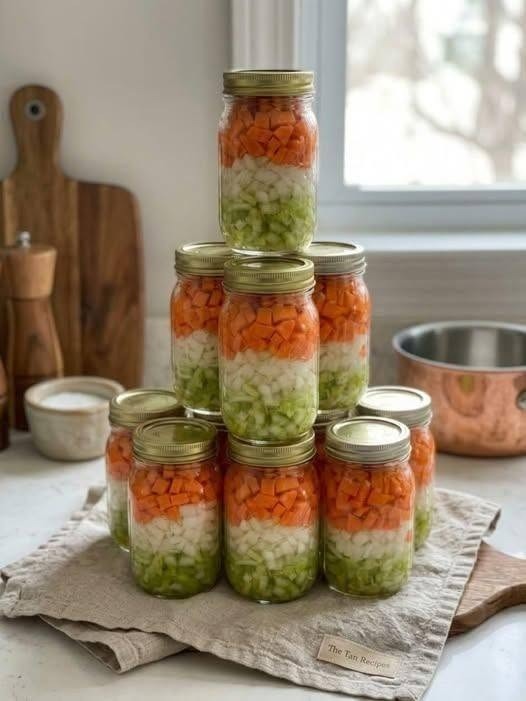
If you love having fresh vegetables ready whenever you need to make dinner, these homemade chopped vegetable jars are a simple way to get organized in the kitchen. With colorful layers of carrots, onions, and celery, they look beautiful in glass jars and make meal preparation easier on busy days.
This classic vegetable combination works wonderfully as a starting point for homemade soups, stews, sauces, casseroles, and many other comfort-food recipes. Instead of washing, peeling, and chopping vegetables every time you cook, you can prepare everything ahead of time and keep it ready to use.
The best part is that this preparation requires just a few basic ingredients and a little time. You can prepare several jars at once, making it easier to add flavor and vegetables to your favorite family meals throughout the week.
Why You’ll Love This Recipe
There are plenty of reasons to keep a homemade vegetable mixture ready in your kitchen.
- Easy meal preparation: Save time by chopping your vegetables in one session.
- Simple ingredients: You only need carrots, onions, celery, and water if you plan to cook the mixture.
- Versatile: Use the vegetables in soups, stews, casseroles, pasta sauces, and more.
- Budget-friendly: Preparing vegetables at home can help reduce waste and make use of vegetables you already have.
- Beautiful presentation: The orange, white, and green layers look lovely in clear glass jars.
- Easy to customize: Adjust the proportions to suit the dishes your family enjoys.
Whether you’re preparing meals for a busy week or stocking your freezer with convenient ingredients, this vegetable mixture is a practical kitchen staple.
Ingredients You’ll Need
This recipe uses three familiar vegetables that complement one another in many savory dishes.
Ingredients
- 4 cups carrots, peeled and finely diced
- 4 cups onions, peeled and finely diced
- 4 cups celery, washed and finely diced
- Cold water, if needed for rinsing
- Clean, food-safe glass containers with lids
You can adjust the quantities depending on how many servings you want to prepare. For a more carrot-forward mixture, add extra carrots. If you prefer a stronger savory flavor, increase the amount of onion.
Choose fresh, firm vegetables without soft spots, mold, or signs of spoilage. Smaller, evenly diced pieces are convenient because they cook at a similar rate and are easy to scoop into a pot.
How to Prepare the Vegetables
Step 1: Wash Everything Thoroughly
Begin by washing your carrots, celery, and onions. Rinse the carrots and celery under cool running water to remove dirt and debris.
Peel the carrots and onions. Trim the ends of the celery and remove any damaged outer pieces.
Pat the vegetables dry with a clean kitchen towel before chopping. Removing excess surface moisture helps keep the prepared mixture from becoming unnecessarily watery.
Step 2: Dice the Carrots
Cut the peeled carrots into small, evenly sized cubes. Try to keep the pieces similar in size so they cook evenly when added to soups or stews.
If you prefer a softer texture in your finished dishes, dice the carrots a little smaller. For chunky vegetable soups, slightly larger pieces work well.
Place the chopped carrots in a clean bowl.
Step 3: Chop the Onions
Peel the onions and remove their root ends. Dice them into small pieces, keeping the size similar to the carrots.
Onions add a savory base to many recipes. They release their flavor as they cook, making them a useful addition to homemade broths, sauces, and hearty one-pot meals.
Transfer the diced onions to a separate bowl.
Step 4: Prepare the Celery
Wash the celery stalks carefully, paying attention to the spaces where dirt can collect.
Trim the ends and cut the stalks into small pieces. If the stalks are particularly thick or fibrous, you can remove the tougher strings before chopping.
Celery adds a fresh, savory flavor that pairs especially well with carrots and onions.
Step 5: Arrange the Vegetables in Jars
For the attractive layered appearance shown in the photograph, place the chopped celery at the bottom of clean glass containers, followed by the onions and then the carrots.
Repeat the layers until the containers are filled, leaving enough space to close them without crushing the vegetables.
The colorful layers make the mixture easy to identify and create a neat presentation. However, layering is optional. You can also combine all three vegetables in a bowl before portioning them.
Important: These jars are for refrigerated or frozen preparation, not shelf-stable storage. Do not store this raw vegetable mixture in sealed jars at room temperature.
How to Store Your Vegetable Mixture Safely
Once the vegetables are chopped and portioned, choose the storage method that best fits your cooking routine.
Refrigerator Storage
Keep the prepared vegetables in clean, covered food containers and refrigerate them promptly at 40°F (4°C) or below.
For the best quality, use the mixture within about three to four days. Discard it sooner if it develops an unusual smell, slimy texture, mold, or other signs of spoilage.
Keep the jars refrigerated rather than leaving them on the kitchen counter.
Freezer Storage
Freezing is a convenient option if you want to prepare a larger batch.
Divide the chopped vegetables into meal-sized portions and place them in freezer-safe containers or bags. Remove excess air from freezer bags and label each portion with the preparation date.
Freeze promptly at 0°F (-18°C) or below. For best flavor and texture, use the mixture within approximately three months.
You can generally add frozen portions directly to soups, stews, and other dishes that will be thoroughly cooked. The vegetables may soften after freezing, so they are especially suitable for cooked meals rather than fresh salads.
What About Pressure Canning?
Carrots, onions, and celery are low-acid vegetables. They must not be treated like high-acid foods when preserving them in sealed jars.
Do not use a 40-minute processing time or assume that filling jars with water and tightening the lids makes this particular mixture safe for room-temperature storage. Use only a tested pressure-canning recipe that specifically covers the ingredients, proportions, jar size, processing time, and altitude involved. If no tested recipe covers this exact mixture, refrigerate or freeze it instead.
Ways to Use Your Chopped Vegetable Mixture
One of the biggest advantages of preparing these vegetables ahead of time is how many meals you can make with them.
1. Homemade Vegetable Soup
Add the vegetables to a pot with broth, seasonings, and your favorite additional vegetables. Simmer until everything is tender, then adjust the seasoning to taste.
2. Hearty Chicken Soup
Cook the mixture with chicken, broth, and herbs for a comforting homemade chicken soup. Add noodles or rice if desired.
3. Beef Stew
Start by browning beef in a pot. Add the vegetable mixture, broth, and your preferred seasonings, then simmer until the meat becomes tender.
4. Pasta Sauce
Cook the vegetables in a little oil until softened, then add your preferred tomato-based sauce ingredients and herbs. Simmer to develop the flavor and serve over pasta.
5. Casseroles and One-Pot Meals
Stir the chopped vegetables into casseroles, rice dishes, or other savory recipes that benefit from a flavorful vegetable base.
Helpful Tips for the Best Results
- Keep the vegetables approximately the same size for even cooking.
- Use fresh produce for the best flavor and texture.
- Prepare only as much as you can refrigerate or freeze promptly.
- Label freezer portions so you can identify them easily.
- Avoid leaving prepared vegetables at room temperature for extended periods.
- Clean your cutting boards, knives, containers, and work surfaces before and after preparation.
Frequently Asked Questions
Can I use this mixture in everyday cooking?
Absolutely! Carrots, onions, and celery are a versatile combination that works in countless savory dishes.
Do I need to layer the vegetables?
No. Layering is mainly for appearance. Mixing the vegetables together is equally practical.
Can I add other vegetables?
Yes, for refrigerated or frozen use, you can customize the mixture with vegetables such as bell peppers. Consider how each vegetable cooks and how you plan to use the finished mixture.
Can I leave the sealed jars in my pantry?
No. Ordinary sealed jars do not make low-acid vegetables safe for pantry storage. Refrigerate or freeze this preparation unless you are following a properly tested preservation recipe.
Final Thoughts
Homemade chopped vegetable jars are a simple way to make everyday cooking more convenient. With carrots, onions, and celery prepared in advance, you can save time, reduce kitchen cleanup, and get a head start on soups, stews, sauces, and family dinners.
Prepare a batch when you have fresh vegetables available, portion it into convenient containers, and refrigerate or freeze it for later use. A little preparation today can make cooking tomorrow much easier!

Leave a Reply