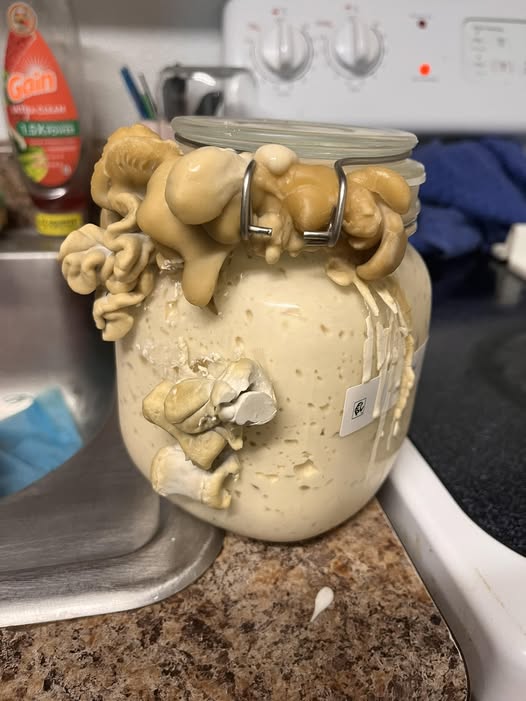
It’s actually more common than you might think, especially when you keep sourdough discard in the fridge for a while. Don’t worry—you didn’t necessarily do anything wrong. Here are a few things that could have happened.
First, sourdough discard continues to ferment, even in the refrigerator. The cold slows it down, but it doesn’t stop it completely. Over time, the natural yeast and bacteria keep producing gas. If the jar was tightly sealed, that gas had nowhere to go, so pressure built up inside the jar. That’s why it can look swollen, bubbly, or even a little scary to open.
Another possibility is over-fermentation. When discard sits too long without being used or refreshed, the microorganisms keep working and the mixture can separate, smell very strong, or develop unusual textures. Sometimes a layer of liquid (called “hooch”) forms on top. That part is usually harmless, but if the discard smells extremely foul or looks moldy, it’s definitely best to throw it away like you did.
The biggest thing to check with discard is mold. If you see fuzzy spots that are green, pink, orange, or black, that means mold has grown and it should be discarded immediately. Mold can happen if the discard sits too long, the jar isn’t clean, or moisture from other foods gets inside.
To help prevent this in the future, here are a few simple tips:
- Use a loose lid or cover the jar lightly so gas can escape.
- Don’t store discard too long. Try to use it within about 1–2 weeks.
- Keep the jar clean and switch containers occasionally.
- Check it before using—it should smell tangy or sour, not rotten.
If it makes you feel better, almost every sourdough baker has had a “mystery jar” in the fridge at some point. Tossing it and starting fresh is totally normal.
If you want, you can also tell me what it looked like (color, bubbles, smell, jar shape, etc.), and I can help you figure out exactly what likely happened.

Leave a Reply