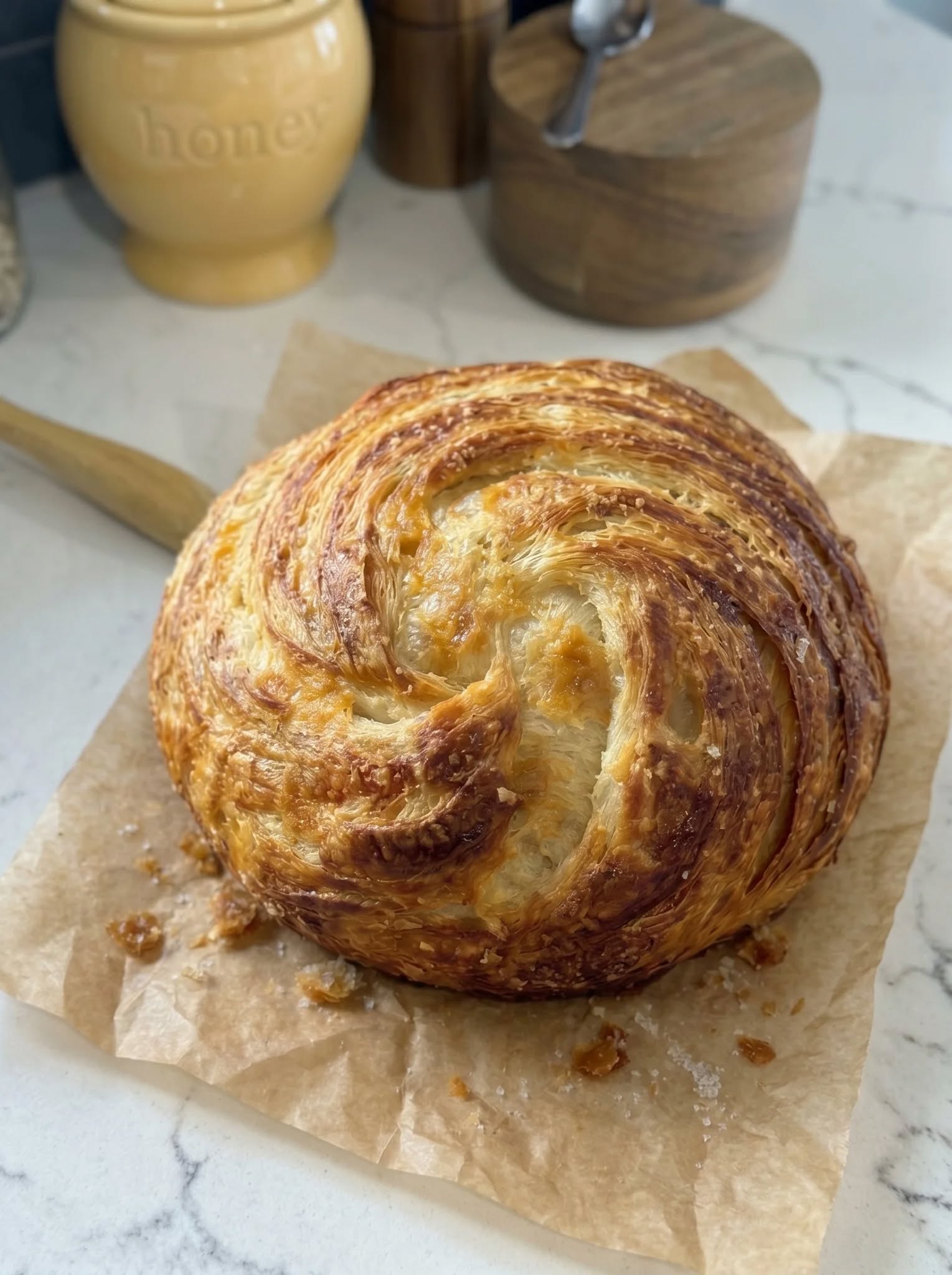
If you love the rich, flaky texture of a croissant but don’t want to deal with complicated lamination, this recipe is going to change your baking game completely. This Buttery Croissant-Style Sourdough Loaf is a clever hybrid between traditional sourdough bread and buttery pastry-style baking. It delivers that golden, crispy crust and soft, layered interior—without the stress of folding butter blocks or doing multiple turns like classic croissants.
Instead of laminating dough, this recipe uses a much simpler but highly effective technique: cold grated butter is worked directly into the dough during stretch and folds. This small adjustment creates a big transformation in texture. As the bread bakes, the butter melts and forms tiny pockets of steam inside the dough, giving you a crust that feels flaky, crisp, and slightly laminated—even though you never actually laminated anything.
The result is a rustic artisan loaf that looks simple on the outside but tastes incredibly rich and bakery-level on the inside. It’s perfect for breakfast, sandwiches, toast, or even eaten warm with just a bit of butter.
Why This Recipe Feels Special
What makes this sourdough loaf stand out is how it bridges two baking worlds. You get the depth, tang, and complexity of sourdough fermentation combined with the indulgent richness of buttery pastry.
1. Flaky, Golden Crust
The grated butter technique is the real secret here. When cold butter is distributed throughout the dough, it melts during baking and creates tiny air pockets. These pockets give the crust a light, crackly, and almost croissant-like texture. Every slice has a delicate crunch when you cut into it.
2. Rich But Controlled Butter Flavor
Unlike traditional pastry doughs where butter is heavily layered, this method allows you to control richness without risking greasy dough. You can adjust the butter depending on your experience level and desired richness. Even beginners can achieve great results without ruining the dough structure.
3. Soft, Moist, and Long-Lasting Crumb
Inside the loaf, the crumb stays soft, airy, and buttery for days. The fat from the butter doesn’t just add flavor—it helps retain moisture, which means your bread stays fresh longer than a standard sourdough loaf.
Ingredients
- 100g active sourdough starter (bubbly and recently fed)
- 350g water (adjust slightly if needed)
- 500g bread flour (strongly recommended for structure)
- 10g salt
- Cold butter (grated, amount varies based on skill level)
How to Make Buttery Croissant-Style Sourdough Loaf
Step 1: Mix and Autolyse
Start by mixing your sourdough starter with water until fully combined. Add flour and salt, then mix everything into a rough, shaggy dough. Don’t worry if it looks messy at this stage—that’s completely normal.
Cover the bowl and let the dough rest for about 1 hour. This resting stage, known as autolyse, helps the flour fully hydrate and makes the dough easier to work with later.
Step 2: Build Dough Strength
After resting, begin strengthening the dough with stretch and folds. This process develops gluten naturally without kneading.
Perform 20–25 total folds per session, stretching the dough gently and folding it over itself. Let it rest for 30 minutes afterward.
The dough will gradually become smoother and more elastic.
Step 3: Add the Butter (Key Step)
This is where the magic happens.
During your stretch and fold sessions:
- Add half of the grated cold butter during the second round
- Add the remaining butter during the third round
It is very important that the butter stays cold. If it starts melting into the dough too early, you will lose the flaky effect.
Complete a total of 4 stretch-and-fold sessions, spaced 15–30 minutes apart. Each round will make the dough stronger while distributing butter evenly.
Step 4: Bulk Fermentation
Let the dough rest at room temperature until it rises about 70–75%.
This stage is crucial for flavor development and structure. However, temperature control matters a lot here. If the room is too warm, the butter may soften too much, affecting texture. If needed, briefly chill the dough during fermentation.
The dough should feel airy but still structured when ready.
Step 5: Shape the Dough
Turn the dough onto a lightly floured surface. Shape it into either a round loaf or a batard (oval shape).
If you prefer softer, sandwich-style bread, you can also place it into a loaf pan.
Transfer the shaped dough into a floured banneton basket, seam side facing up.
Step 6: Cold Proof (Important Flavor Booster)
Place the dough into the refrigerator for at least 5 hours, or up to 36 hours.
This step improves flavor, strengthens structure, and firms up the butter again. That firm butter is what helps create the flaky, layered crust during baking.
The longer the cold proof (within reason), the deeper the flavor becomes.
Step 7: Bake the Bread
Preheat your oven to 450°F (230°C) with a Dutch oven inside.
Once hot, carefully place the dough inside and bake:
- 30 minutes covered
- 10–15 minutes uncovered at 410°F (210°C)
After baking, remove the loaf and let it cool completely on a wire rack before slicing. This is important because cutting too early can ruin the crumb structure.
Butter Levels (Choose Your Skill Level)
- Beginner: 75g butter + 350g water
- Intermediate: 100g butter + 360g water
- Advanced: 115g butter + 370g water
More butter creates richer flavor and more flakiness, but also makes the dough slightly harder to handle.
Pro Tips for Best Results
To get bakery-quality results, these small details matter a lot:
- Always keep dough cool, especially during butter incorporation
- Freeze butter before grating for clean, even pieces
- If dough feels greasy, chill it immediately
- Use high-quality butter for best flavor impact
- Bake in a Dutch oven to trap steam and improve crust development
Why This Method Works So Well
Traditional croissants rely on precise lamination—folding butter into dough multiple times to create distinct layers. This recipe takes a simpler approach.
Instead of structured layers, the butter is distributed throughout the dough. When baked, it melts and creates micro-steam pockets. These pockets mimic a flaky texture without requiring technical pastry skills.
It’s not a true croissant—but it delivers a similar experience in a much easier way.
Flavor Variations
Once you master the base loaf, you can experiment with different flavors:
- Ham & Cheese: Add before shaping for a savory loaf
- Chocolate Chip: Turns it into a dessert-style bread
- Raisin & Cinnamon: Warm, bakery-style sweet loaf
Final Thoughts
This Buttery Croissant-Style Sourdough Loaf is a perfect example of smart baking—getting maximum flavor and texture with minimal complexity. It combines the rustic charm of sourdough with the indulgent richness of buttery pastry, all without the technical stress of lamination.
The first bite gives you a crisp crust, followed by a soft, buttery interior that feels like something straight out of a professional bakery. It’s simple enough for home bakers but impressive enough to feel special every time you bake it.
Once you try this method, regular sourd

Leave a Reply